

Headline: Climate change will deepen populist and public anger by pushing rural poor into cities, worsening urban conditions, and driving wealthier classes away. But the unrest it creates won’t show up as “climate protests.”
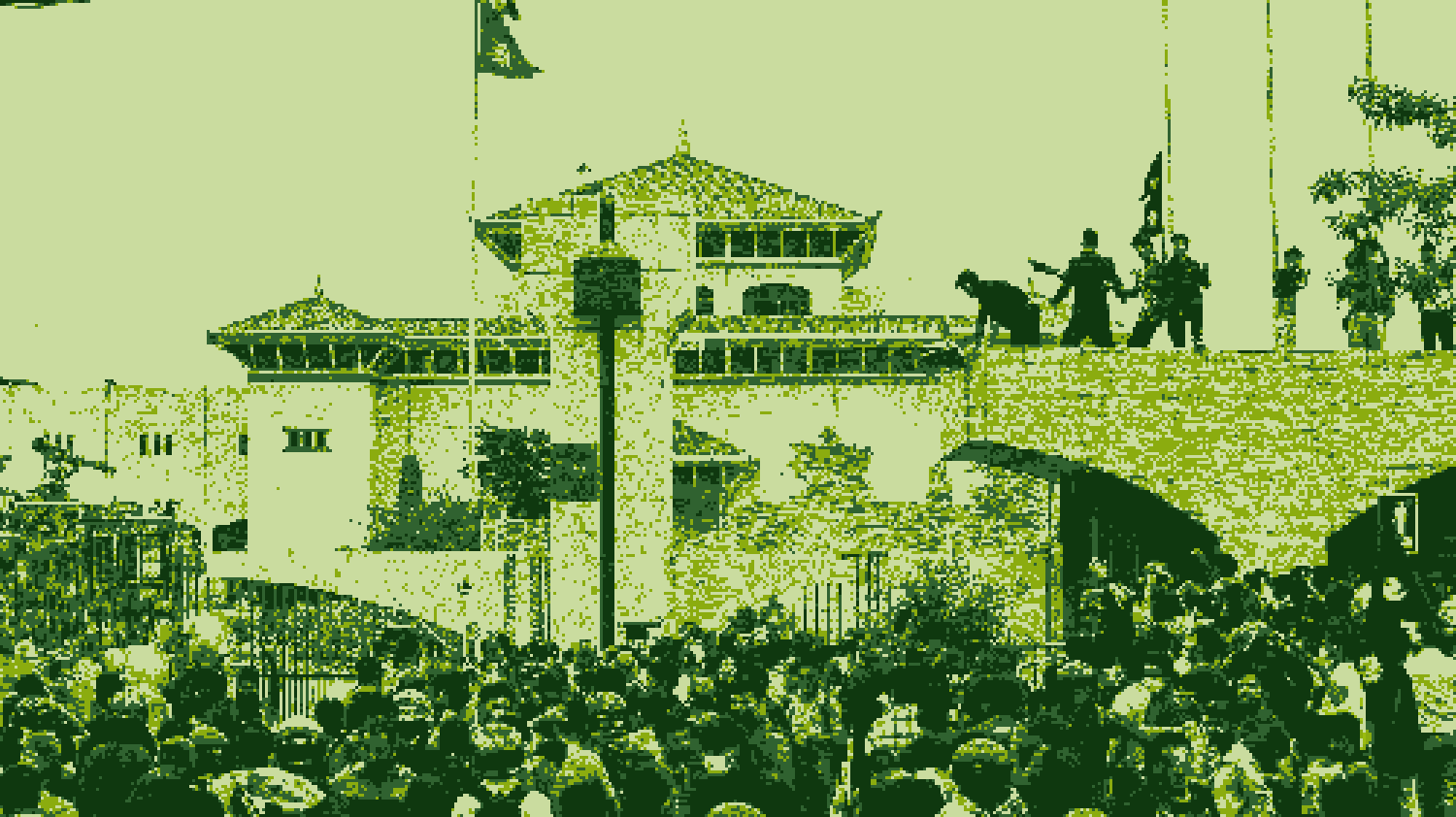
Beginning in 2024 and peaking in 2025, nations worldwide were rocked by the ongoing wave of ‘Gen-Z protests’. Youth-led revolts in Bangladesh, Nepal, Madagascar, Kenya, and beyond, directed against a political class they saw as no longer serving them. A lot of this was lost in the noise of other geopolitical developments. Liberation Day, the ‘war’ in Gaza, but they were significant not just because they toppled a government or two (and led to a death sentence for a former head of state), but because they were seen as the first time Zoomers made their political power felt.
In a sense, the grievances which sparked them weren’t particularly new. Corruption, unfair taxes, poor job prospects, and anger at sclerotic, increasingly gerontocratic political establishments have all been creating unrest since (at least) the secession of the plebs. But alongside cultural tropes and their technological connectivity, the Gen-Z protests were novel because they concretely expressed the vibe that the social contract—as typified by a growing, globalised political economy—had failed.
They were protests against a tightening of prospects. The rapid increase in basic costs, the steady decline in opportunities. Poor housing, poor infrastructure, and oligarchs sucking up all the remaining fruits of growth. In Serbia, for example, a collapsing train station (and the corruption which led to it) sparked a series of protests that have been ongoing for over a year, with hundreds of thousands joining in. The Gen-Z protests were also strikingly anti-political, not bound across party/traditional political spectrum lines, but defined by a general “sense of disgust toward politicians and nepotism”— a formless, angry, populist “swarm” held together by shared grievance and the gossamer threads of the internet.
They are also, I think, a pretty good example of the kind of protests that climate change will begin to spark in the coming years. If, indeed, it has not already had a hand in the unrest we’re currently seeing in Iran.
Rural Exodus
As I covered in another piece, Iran is in the grips of a horrendous drought. A situation infinitely exacerbated by poor management of its hydrological resources by the so-called ‘water mafia’. It’s bad enough in the cities, where the prime minister has floated the idea of evacuating the capital in response. But it is worse in the countryside.
Due to the drought, the rural population of Iran is in a state of ‘collapse’. Over 31,000 villages have been abandoned due to “climatological shifts and policy failures”. Let’s put that in perspective for a second: that’s over 45% of the country’s villages. Nearly half of all rural centres have disappeared due to ecological catastrophe. Many more remaining villages have seen population declines. All of these people are fleeing to cities1 as a “new class of environmental refugees”—desperate, angry, and feeding into an urban population already seething from war, economic collapse, and a hated and unresponsive government.
If there were ever a perfect example of climate as a ‘threat multiplier’, this’d be it. There is not insignificant evidence that this same process—drought-displaced farmers moving into economically strained cities—was one of the key sparks of the 2011 Syrian revolution and the rise of ISIS. As Peter Schwartzstein quotes from one of these displaced, revolutionary farmers:
“Bad rains, bad governmnent, bad times”
Climate (like in Syria) isn’t the driving force in Iran’s latest bout of unrest. But it has significantly exacerbated it, and potentially brought it to a boiling point sooner than it would otherwise have bubbled over. The millions of environmental refugees streaming into cities did not cause the economic downturn, the endless wars, or entrench the theocratic oligarchy. But their arrival is like throwing petrol on a fire; you need the fire first, but it certainly doesn’t help the situation calm down.
Because when these refugees do get to cities, they find the same climate change which drove them is making the cities worse to live in. The water shortages are there, too—as well as the hurricanes, wildfires, and heatwaves. The urban heat island effect is turning cities into ovens across the tropics (and beyond). The psycho-political effects of this are probably underappreciated. In Dar es Salaam, Tanzania, for example, one of the biggest complaints of residents was the inability to sleep properly during (increasingly common) heatwaves. This creates a population that, for all the daily trials of a climate changed life, is going about its day antsy, itchy, and without the mental energy to emotionally regulate itself. There is well supported correlation between increased temperature and violence, and one-third of all conflicts between 1980 and 2016 occurred in the immediate aftermath of a climate/natural disaster. A real tinderbox for urban unrest.
These are just a couple of the direct problems. ‘Cascading impacts’ is a bit of a fuzzy term, but think of the second order consequnces in Iran when nearly half the rural population suddenly floods into urban settlements during a period of crisis. Rents go up, food costs more, and the job market becomes increasingly competitive with the influx of willing/desperate workers. Exacerbating factors—cost of living, unemployment— that uniformly rank among the top grievances for younger generations. It’s no surprise then that, unlike previous periods of unrest, the current Iranian protests are mainly being led by young, low-wage workers and small business owners (Bazaaris) in the informal(ish) economy—those most devastated by the one-two punch of dire prospects and an influx of the rural poor to compete for these slim pickings.
Seccesio Patricius
One of the factors worsening this popular anger, in Iran and beyond, is the growing gulf between elites and the urban masses. In Nepal, their own Gen-Z protests were kicked off in no small part because of ostentatious elite wealth and nepotism. Most infamously, an Instagram post by Saugat Thapa (the son of a provincial minister) showing off a ‘christmas tree’ built of Louis Vuitton gifts:
But this gulf is being widened by environmental factors, in one sense quite literally, as urban elites flee heatwaves, pollution, and the squalor of large cities—something happening en masse in India. Even within cities, those who can afford AC, freshwater, and cooler leafy neighbourhoods will become more distinct than the have-nots. As a study on ‘Heat Inequality’ from Utrecht University outlined:
“climate change, often seen as an environmental issue [has become] political, amplifying urban inequalities that already existed.”
It’s not just about aesthetics or comfort either, as air pollution and heatwaves have serious (often fatal) health impacts. Iran is (again) going through an air pollution crisis, which has killed thousands. This elite evacuation doesn’t just separate them further from the masses, it also takes out their wealth, productivity, and cultural capital—leaving the places they evacuate poorer and, on a more socio-cultural level, with less visible aspiration for the working class. Paradoxically, the other side of this coin is the greater access to information and visible wealth through social media, but these twin trends can compound to make such an aspiration look more remote. In the Gen Z protests, this drove anger because, though ‘aspirational’ lifestyles were more visible, their attainment appeared increasingly distant.
As we know (especially in Europe), the loss of aspirational opportunities has probably done more damage than the actual loss of jobs and opportunities themselves. The ‘Sigma Grindset’ is, if nothing else, a very useful outlet for excess mental and emotional energy—but if there’s nothing to visibly grind for, or no obvious way to do so, such energies can very quickly turn into political anger. This could create something like the ‘grammar school effect’ seen in the UK, whereby removing the high achievers from non-selective schools removed the ‘leaders’ and sources of ‘academic aspiration’ for the rest, leading to worse grade results overall. Prospects of advancement become so remote as to seem unachievable, a sentiment already appearing across the world. Take this quote from a young tech worker in San Francisco:
“You need to make money now, before you become a part of the permanent underclass.”
In the US (which has a significantly larger wealth buffer against climate impacts) just about half the population is planning to move to avoid climate impacts, so this is a pretty good indication that across the world, those who can (read; wealthier people) will be migrating out of climate vulnerable zones—impoverishing them culturally and politically as well as economically, and feeding the sense that those left behind are, well, being left behind. And once the wealth and tax receipts dry up, so does local government, leaving service deserts in their wake that further reduce liveability. The people left in these increasingly unlivable and climate-worsening conditions, without the option to move or migrate (though this will happen in great numbers), are unlikely—if history is anything to go by—to take it lying down.
No more ‘No Planet B’
So, all the grievances which popped up in the spree of ‘Gen Z’ protests are significantly worsened by climate impacts. Rural influx, cost-of-living increase, declining urban living conditions; these cascade into housing, job prospects, etc.
Hence, my prediction is that we probably won’t see any ‘climate springs’—widespread unrest directly referencing climate as a grievance—in the near future, but will almost certainly see more traditional grievance protests driven by climate change; all feeding into (and off of) the chaotic realignment to a multipolar world. Iran is, again, the perfect example of this. Pre-existing fault lines are being prized open by environmental catastrophe, pushing the pressures beyond the threshold at which they explode into popular anger.
So what’s the bottom line here? Climate unrest will not show up with ‘there is no planet B’ placards2. It will show up as protests against corruption, against water shortages, food costs, unaffordable housing, government dysfunction, and so on. In particular, it will show up as increased acrimony over ostentatious wealth and nepotism. Because the ability of the wealthy to sequester themselves away from the impacts of climate change will not just further separate them from ordinary people, but also create (or exacerbate) a layer of ecological privilege—and this despite their usually worse footprints. All these points of contention exist prior to climate concerns; it’ll just make them more unpalatable and prime the urban social environment to react with unrest.
The eventual outcome of this unrest is decided by other factors—such as sophisticated digital censorship—but crises of this type will be increasingly pushed to an inflexion point by accelerating climate change. The Gen-Z wave will probably just prove a prelude to the much larger Gen-Alpha unrest of the 2030’s, whilst we’re at auguries. Climate predictions, and how well (or poorly) a state manages its ecological resources, will become key weak signals for the future of geopolitical analysis.
-Ben Shread-Hewitt
I don’t think this picture is necessarily wholly negative. Many of the rural places people flee are probably unviable given baked-in warming, or at least going to be in the near future. Caring for them and putting them to productive work will be easier in urban spaces, rather than the often very capital-intensive resilience measures if they were kept in situ — take a look at Bangladesh’s massive engineering efforts to save its coastlines and their farming communities. And we should also consider here that, given baked-in climate change, we need to consider the chance that most frontlines today are walking dead, and the defences will need to be drawn where we expect future challenges to hit, creating a defensible fallback position.
I don’t want to overstate the case here, climate change is much more common parlance in the global south and ‘Frontiers’ than is generally understood. Indians will pretty openly claim climate change is making their lives worse. African nomads can tell you from experience that the rains are not what or where they used to be. Indigenous Arctic communities can literally see climate change: permafrost melting, animals dying, and once clean rivers stained red by rusting soils.